
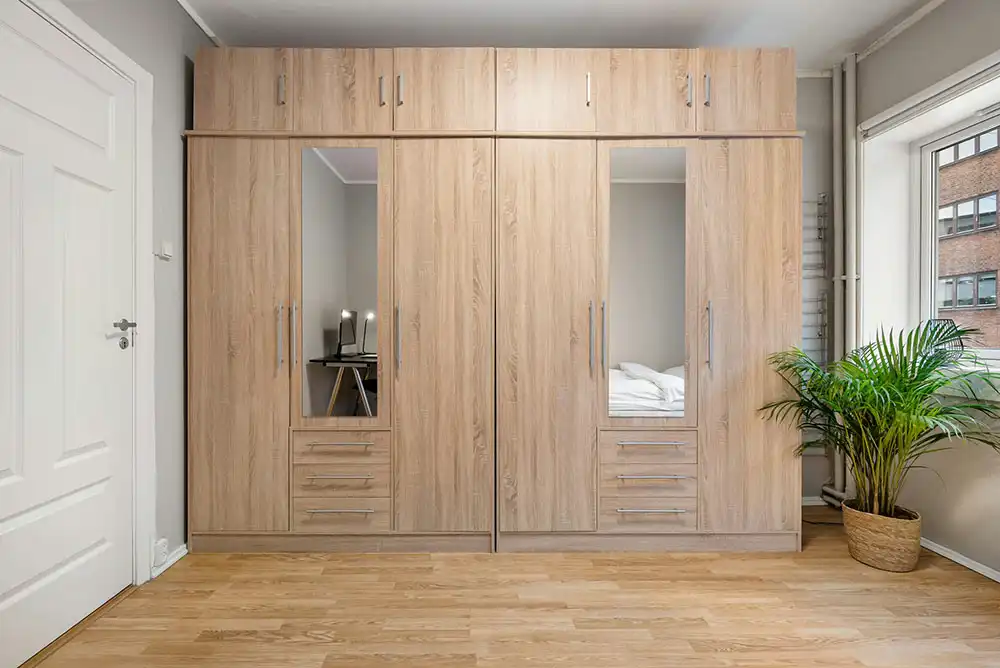
Learn how to adjust sliding wardrobe doors, fix sticking tracks, align uneven panels, and determine when professional repairs or replacement are necessary.
By Dan Burlingham
Sliding wardrobe doors should glide smoothly, close evenly, and stay securely on their tracks. When they start sticking, dragging, or becoming misaligned, a few simple adjustments can often restore their functionality. For homeowners in Simi Valley, California, understanding how to adjust sliding wardrobe doors can help prevent unnecessary damage and costly replacements. Whether you have standard closet doors or custom mirrored panels, this guide explains how to identify common problems, make safe adjustments, and recognize when professional assistance is the better option.
Why Do Sliding Wardrobe Doors Stick or Drag?
Sliding wardrobe doors typically stick or drag because of dirty tracks, misaligned rollers, loose hardware, or worn components. Identifying the underlying cause is the first step toward making an effective adjustment.
Over time, dust, carpet fibers, and other debris accumulate inside the tracks. This buildup creates resistance and prevents the rollers from moving freely.
Other common causes include:
- Misaligned rollers: Uneven roller heights cause doors to tilt or scrape against the frame.
- Worn roller wheels: Damaged or deteriorating rollers can make doors difficult to move.
- Loose mounting hardware: Screws and brackets may loosen through repeated use.
- Bent tracks: Dented or distorted tracks can prevent smooth movement.
- Improper door alignment: Panels may rub against each other or the surrounding frame.
Start by slowly sliding each door across its track. Listen for scraping, grinding, or clicking sounds, and notice where the resistance occurs.
If the door sticks in one particular location, inspect that section of the track. If it drags throughout its movement, the rollers or overall alignment may need attention.
How Do Sliding Wardrobe Door Mechanisms Work?
Sliding wardrobe doors operate using a combination of tracks, rollers, guides, and adjustment hardware that allows the panels to move horizontally.
Understanding these components makes troubleshooting easier and helps prevent accidental damage during adjustments.
Most residential sliding wardrobe systems include:
- Upper track: Guides the upper portion of the panels and may support their weight in top-hung systems.
- Lower track: Supports the rollers in bottom-rolling systems or guides the panels in top-hung designs.
- Roller assemblies: Allow the doors to move smoothly along the track.
- Adjustment screws: Raise, lower, or reposition the door through the roller assembly.
- Floor guides or alignment brackets: Help prevent excessive sideways movement.
- Anti-jump devices: Keep compatible door panels from lifting out of their tracks during normal operation.
Two common designs are bottom-rolling and top-hung systems.
Bottom-rolling doors carry most of their weight on rollers near the floor. Top-hung doors suspend their weight from overhead hardware.
This distinction matters because the location of the adjustment mechanism depends on the door system.
Before making adjustments, determine which track supports the door's weight and locate the manufacturer's adjustment points.
What Tools Do You Need to Adjust Sliding Wardrobe Doors?
Most sliding wardrobe door adjustments require only basic household tools, including a screwdriver, level, flashlight, and cleaning supplies.
Having the correct tools available makes the process easier and reduces the risk of damaging the doors or hardware.
Recommended tools include:
- Phillips-head and flathead screwdrivers
- Allen wrenches, if required by the roller hardware
- Small spirit level
- Flashlight
- Vacuum cleaner with a narrow attachment
- Soft microfiber cloth
- Mild household detergent
- Silicone-based lubricant approved for the track and roller system
- Protective gloves and closed-toe shoes
Check the adjustment screw before selecting a tool. Using an incorrectly sized screwdriver can strip the screw head and make future adjustments difficult.
For mirrored sliding doors, avoid placing metal tools directly against the glass.
If the door needs to be removed, arrange for another adult to help support its weight. Large mirrored panels can be particularly heavy and difficult to control.
How Do You Adjust the Height of Sliding Wardrobe Doors?
You can adjust the height of many sliding wardrobe doors by turning the roller adjustment screws to raise or lower one side of the panel.
These screws are commonly located near the bottom corners of bottom-rolling doors or within the upper hanger assemblies of top-hung systems.
Step 1: Locate the Adjustment Screws
Open the wardrobe door partially and inspect the roller assemblies.
Depending on the design, the screws may be accessible through small holes along the side or bottom edge of the door.
Some systems have removable protective covers concealing the adjustment mechanism.
Step 2: Check the Door's Position
Use a spirit level to determine whether the door is sitting evenly.
Also inspect the distance between the door's vertical edge and the closet frame.
An uneven gap often indicates that one side needs to be raised or lowered.
Step 3: Make Small Adjustments
Insert the correct screwdriver or Allen wrench into the adjustment mechanism.
Turn the screw approximately one-quarter turn at a time, following the hardware manufacturer's instructions.
On many systems, turning the adjustment screw clockwise raises the corresponding corner. However, adjustment directions vary by manufacturer.
Step 4: Test the Door
Slide the door slowly from one side to the other.
Check that it moves freely without scraping the floor, rubbing against the upper track, or contacting the adjacent panel.
Repeat small adjustments until the door is level and operates smoothly.
Avoid raising the door excessively. Improper roller engagement can make the panel unstable or increase the risk of derailment.
How Do You Realign Sliding Wardrobe Doors?
To realign sliding wardrobe doors, inspect the tracks, verify that the rollers are seated correctly, and adjust the panel height until the doors sit parallel to the frame.
Misalignment often becomes noticeable when one door overlaps another unevenly or fails to close against the closet opening.
Follow these steps:
- Inspect both tracks. Look for loose fasteners, bent sections, or debris.
- Check roller engagement. Confirm that each roller is seated in its designated track.
- Examine the door edges. Identify which side appears higher or lower.
- Adjust the appropriate roller. Make small changes until the panel becomes level.
- Check the overlap. Close the panels and verify that they overlap as intended.
- Test the full range of motion. Slide each door several times to confirm consistent movement.
If the panels remain crooked despite adjustments, inspect the track itself.
A loose track may shift during operation, while a bent track can force the door out of alignment.
Tighten accessible loose mounting screws, but avoid forcing damaged tracks back into shape while glass panels remain installed.
Persistent alignment issues may indicate worn hardware, an uneven opening, or an improperly installed track.
How Do You Fix Sliding Wardrobe Doors That Keep Coming Off Track?
Sliding wardrobe doors that repeatedly come off their tracks usually have damaged rollers, incorrect height settings, loose guides, or faulty anti-jump hardware.
The first step is identifying why the door is losing contact with its track.
Begin with these checks:
- Inspect the track for debris or damage.
- Look for cracked, missing, or severely worn rollers.
- Verify that floor guides and alignment brackets are secure.
- Check whether the door has excessive vertical movement.
- Examine any anti-jump clips or retaining mechanisms.
For lightweight doors, the manufacturer's instructions may explain how to safely reseat the panel.
However, removing or repositioning large mirrored doors requires additional precautions.
Never force a door back onto its track by pushing against the mirror surface. Pressure applied unevenly to the glass can damage the panel or its supporting frame.
If the door feels unstable, stop using it until the problem is corrected.
A door that repeatedly derails may need replacement rollers, track repairs, or professional reinstallation rather than another height adjustment.
How Do You Safely Adjust Mirrored Closet Doors?
Mirrored closet doors should be adjusted through their frames, roller mechanisms, and mounting hardware without applying direct pressure to the glass.
Mirrored panels require greater care than many standard wardrobe doors because of their weight and the potential consequences of glass breakage.
Community Glass & Mirror specializes in custom glass and mirror installations for homeowners throughout Simi Valley and Ventura County. Proper hardware alignment and careful handling are essential to protecting these installations.
Before adjusting mirrored doors:
- Inspect the glass for cracks, chips, or loose sections.
- Check that the surrounding frame is secure.
- Confirm that the rollers remain properly engaged.
- Keep children and pets away from the work area.
- Have another adult stabilize the panel if necessary.
- Make adjustments only through the designated hardware.
If the mirror is cracked or separating from its backing, do not attempt to remove or adjust the panel yourself.
Similarly, avoid lifting heavy mirrored doors without understanding how their retention mechanisms work.
Homeowners considering updated mirror glass sliding wardrobe doors can benefit from professionally fitted hardware that supports the panels correctly and provides reliable movement.
A properly aligned mirrored closet door should glide without wobbling, scraping, or placing excessive stress on its frame.
Should You Adjust or Replace Sliding Wardrobe Door Rollers?
Adjust sliding wardrobe door rollers when they are structurally sound but incorrectly positioned. Replace them when the wheels, bearings, or mounting assemblies show signs of damage or significant wear.
A height adjustment cannot correct a cracked wheel or seized bearing.
Common signs that rollers need replacement include:
- Grinding or squeaking that continues after cleaning
- Flat spots on roller wheels
- Cracked or chipped roller surfaces
- Loose or excessively wobbly wheel assemblies
- Rollers that stop turning freely
- Adjustment screws that no longer hold their settings
When Is Adjustment Enough?
Adjustment is usually sufficient when the door rolls smoothly but sits unevenly or makes light contact with the frame.
If the roller assemblies remain intact and move freely, correcting their height may restore normal operation.
When Is Replacement Necessary?
Replacement becomes the better solution when rollers are physically damaged, severely worn, or unable to maintain proper alignment.
Choose replacement hardware that matches the original assembly's dimensions, mounting configuration, wheel profile, and weight rating.
For heavier mirrored doors, roller capacity is especially important.
Installing undersized or incompatible rollers may create recurring alignment problems and place unnecessary stress on the glass panel.
If the original hardware is obsolete, a glass and mirror specialist can assess whether compatible replacement components or a more extensive upgrade are appropriate.
How Do You Fix Gaps Around Sliding Wardrobe Doors?
Gaps around sliding wardrobe doors can often be corrected by adjusting the roller heights and ensuring the panels sit vertically within the opening.
Uneven gaps are particularly noticeable with full-length mirrored doors because their straight reflective edges make alignment differences easier to see.
Start by identifying where the gap appears.
Uneven Gaps Along the Side Frame
If the gap becomes wider toward the top or bottom, the door may be tilted.
Adjust the corresponding roller until the door's edge sits parallel to the frame.
Gaps Between Overlapping Panels
If the doors do not overlap correctly, inspect their position within the upper and lower tracks.
Verify that each panel is installed in the correct channel and that any guides or stops are properly positioned.
Gaps Caused by an Uneven Opening
Sometimes the problem is the closet opening rather than the door.
Settling, previous remodeling work, or incorrectly installed framing can create an opening that is no longer square.
Use a level to check the jambs and track.
If the opening is significantly uneven, roller adjustment alone may not eliminate every gap.
In these situations, professional track repositioning or custom-fitted replacement doors may provide a better result.
How Can You Keep Sliding Wardrobe Doors Moving Smoothly?
Regular track cleaning, hardware inspections, and appropriate lubrication can help sliding wardrobe doors operate smoothly and reduce premature roller wear.
Preventive maintenance is particularly valuable for frequently used bedroom closets and large mirrored wardrobe systems.
Clean the Tracks Regularly
Vacuum the lower track to remove dust, hair, carpet fibers, and small debris.
Wipe accessible surfaces with a soft cloth and mild cleaning solution.
Dry the track thoroughly before operating the door.
Lubricate Only Where Appropriate
Some sliding wardrobe systems benefit from a small amount of manufacturer-approved silicone lubricant.
Other systems use sealed bearings or self-lubricating rollers that require no additional lubrication.
Avoid applying oil or heavy grease indiscriminately, since these substances may attract dirt and create additional resistance.
Inspect the Hardware Periodically
Check for loose screws, abnormal roller movement, and visible track damage.
Pay attention to changes in how the doors sound and feel during operation.
An occasional inspection can identify minor problems before they develop into more expensive repairs.
Avoid Excessive Force
Never slam sliding wardrobe doors or force them past an obstruction.
If a door becomes difficult to move, identify the cause rather than pushing harder.
For most Simi Valley households, checking the tracks every few months is a reasonable starting point. Homes with pets, carpeting near the closet, or frequently used wardrobe doors may require more frequent cleaning.
Should You Repair or Replace Sliding Wardrobe Doors?
Repairing sliding wardrobe doors is generally worthwhile when the panels are in good condition and the problem is limited to adjustable or replaceable hardware.
Replacement may be the better investment when the doors have significant structural damage, recurring mechanical issues, or outdated components that are difficult to maintain.
For example, dirty tracks and minor misalignment usually require cleaning and adjustment rather than replacement. Loose screws or guides can often be tightened or repositioned to restore proper operation.
When rollers are worn but compatible replacement parts are available, installing new roller assemblies may extend the life of the existing doors.
Bent or damaged tracks require closer evaluation. Depending on the severity of the damage, replacing the track may be more effective than attempting to straighten it.
Cracked mirrored panels should be assessed by a professional glass specialist. Damaged glass presents a safety concern, and replacement may be necessary even when the surrounding frame remains functional.
Warped frames or doors that repeatedly develop mechanical problems may justify replacing the entire sliding system.
For homeowners investing in bedroom renovations, replacement can also provide opportunities to improve appearance and functionality.
Modern sliding wardrobe systems may offer smoother-running hardware, updated frame finishes, and customized mirror configurations.
Community Glass & Mirror provides custom wardrobe and closet door solutions designed to complement existing interiors while making efficient use of available space.
For example, a bedroom with limited floor space may benefit from mirrored sliding doors that eliminate the clearance required by traditional hinged doors.
Mirrored panels can also reflect natural light, helping smaller or darker rooms feel more open.
When deciding between repair and replacement, consider the age of the system, the availability of suitable hardware, the overall door condition, and your long-term remodeling plans.
When Should You Hire a Simi Valley Glass Specialist?
Hire a professional glass specialist when sliding wardrobe doors are damaged, unstable, difficult to realign, or equipped with heavy mirrored panels that require specialized handling.
Although basic track cleaning and minor roller adjustments are manageable DIY tasks, some problems require professional tools and experience.
Professional assistance is particularly valuable when:
- Mirrored doors are cracked, chipped, or loose within their frames.
- Panels repeatedly jump out of their tracks.
- Rollers or tracks require replacement.
- Large glass panels must be removed and reinstalled.
- The closet opening is uneven or requires custom fitting.
- Replacement hardware is difficult to identify.
- You want to upgrade to custom mirrored sliding wardrobe doors.
Community Glass & Mirror has served Simi Valley and surrounding communities since 1960.
As a family-owned business, the company provides custom glass, mirror, and closet door solutions throughout Ventura County and portions of Los Angeles County, including Moorpark, Thousand Oaks, Westlake Village, and the Conejo Valley.
The company is a California-licensed glass contractor (C-17 License No. 689624) and is insured and bonded.
Its experienced glass professionals focus on careful measurements, high-quality materials, and precise installation. Many team members have worked with the company for more than a decade.
Unlike companies that routinely subcontract installation work, Community Glass & Mirror relies on its own employees to complete customer projects.
For homeowners with large mirrored wardrobe systems or recurring track problems, professional evaluation can help identify the underlying issue and determine whether an adjustment, hardware repair, or replacement will deliver the best long-term value.
Conclusion: Keep Your Sliding Wardrobe Doors Operating Smoothly
Adjusting sliding wardrobe doors is often straightforward when the issue involves dirty tracks, loose hardware, or minor roller misalignment. By identifying the problem, using the correct tools, and making small adjustments, homeowners can restore smooth operation and extend the life of their closet doors.
However, heavy mirrored panels, damaged rollers, bent tracks, and persistent alignment problems require additional care. Attempting to force or improperly support a glass door can turn a manageable repair into a much larger problem.
For homeowners in Simi Valley and throughout Ventura County, Community Glass & Mirror offers decades of experience in custom glass, mirror, and wardrobe door installations.
If your doors need professional attention or you're considering an upgrade, explore our custom mirrored wardrobe and closet door solutions and contact Community Glass & Mirror at (805) 526-1067 to request a free estimate.
About the Author
Dan Burlingham is the owner of Community Glass and Mirror. He is also still the man that comes out to your home to give quotes on the work and keeps the company running smoothly with all of its employees. Being a locally owned company means you have someone to turn to if you ever have a problem. Dan has carried the traditions of high skilled custom glass and mirror work for residential and commercial work.